
Office Line
+86-15763932413
+86-15763932413

 English
 Views: 0 Author: Site Editor Publish Time: 2025-11-21 Origin: Site


Aluminum casting is essential for mass production across industries. But which process works best for large-scale manufacturing? HPDC and Permanent Mold Casting each offer distinct advantages.
In this article, we’ll compare these two methods, focusing on speed, precision, and cost-effectiveness. You’ll learn which process is better suited for your specific production needs.
High-Pressure Die Casting (HPDC) involves injecting molten aluminum into a steel mold at extremely high pressures, typically between 1,000 and 20,000 psi. This process ensures that even the most intricate designs are filled completely, creating detailed and high-precision components. After solidifying, the mold opens, and the casting is ejected, ready for further processing or use.
HPDC offers several key advantages, including rapid cycle times, high dimensional accuracy, and the ability to produce thin-walled, complex parts. Its efficiency makes it ideal for large-scale production. The use of high pressure allows the molten aluminum to flow easily into complex molds, resulting in precise components with excellent surface finishes.
HPDC is widely used for parts that require precision and high volume. Examples include:
● Automotive components such as engine blocks and transmission housings
● Consumer electronics like laptop bodies and mobile phone frames
● Structural components in industries requiring lightweight but strong materials
Casting Process | Applications |
HPDC | Automotive parts (e.g., engine blocks, transmission housings), consumer electronics (e.g., phone housings), structural components |
Permanent Mold Casting | Aerospace components (e.g., turbine blades, brackets), pump housings, high-performance automotive parts |
Permanent Mold Casting (PMC) involves pouring molten aluminum into reusable metal molds, typically made from steel or iron, under gravity or low pressure. The mold is preheated to ensure efficient filling and solidification. Unlike sand casting, the mold is reused, making this process cost-effective for medium to high-volume production.
PMC provides improved mechanical properties and a better surface finish compared to sand casting. It’s suitable for parts requiring medium to high production volumes and is ideal for thicker, more robust components. The use of reusable molds lowers the cost of each subsequent casting, making it a cost-effective solution for consistent, high-quality parts.
PMC is commonly used in applications that demand strength and durability. Examples include:
● Aerospace components like brackets and structural parts
● Automotive parts such as suspension components and cylinder heads
● Industrial applications where part strength and heat resistance are key
When it comes to mass production, HPDC outperforms Permanent Mold Casting in terms of speed. The high-pressure process allows for rapid cycle times, making it ideal for large-scale production runs. HPDC can produce thousands of parts quickly, reducing labor and material costs.
On the other hand, Permanent Mold Casting is more suited for medium to high volumes. While slower than HPDC, it offers a good balance between speed and cost, particularly for parts that require greater thickness or durability.
HPDC is renowned for its ability to produce parts with excellent dimensional accuracy and fine surface finishes. The high pressure ensures that molten aluminum fills even the smallest details of a mold, resulting in minimal post-processing.
In contrast, Permanent Mold Casting offers good precision but may require more post-processing to achieve the desired surface finish. However, it excels in producing parts with better mechanical properties, such as enhanced strength and fatigue resistance, due to the slower solidification process.
HPDC is highly cost-effective for large-scale production due to its fast cycle times, though the initial tooling costs can be high. Once the mold is made, per-part costs drop significantly, making it ideal for mass production.
Permanent Mold Casting offers lower tooling costs compared to HPDC and is suitable for medium-volume production. The reusability of molds helps reduce costs over time. However, the slower cycle times and additional processing steps may increase operational costs compared to HPDC.
Casting Process | Initial Tooling Cost | Operational Cost | Production Speed | Cost Per Part |
HPDC | High (upfront investment) | Low per part at scale | Fast, short cycle times | Low (at high volume) |
Permanent Mold Casting | Low to medium | Moderate | Slower cycle times | Moderate |
HPDC is ideal for creating thin-walled parts, but it may have challenges with material strength, as trapped gases can create porosity in some cases. The use of advanced techniques like vacuum-assisted HPDC can mitigate this.
Permanent Mold Casting, with its slower cooling rate and denser metal structure, produces stronger parts with fewer defects. It is often preferred for parts that require high mechanical strength, such as structural components in the aerospace and automotive industries.
Criteria | HPDC | Permanent Mold Casting |
Production Volume | High-volume, low-cost | Medium-volume, cost-effective |
Cycle Time | Fast, efficient (seconds per part) | Slower, but consistent |
Precision | High precision, ideal for thin-walled parts | Good precision, ideal for thicker sections |
Cost | High initial tooling cost, lower per part cost at scale | Lower tooling cost, higher per part cost in small runs |
Material Strength | Good for lightweight, non-structural parts | Better mechanical properties, suitable for structural parts |
Applications | Automotive, consumer electronics, housing | Aerospace, automotive structural parts, pump housings |

HPDC is the go-to process for high-volume, low-cost manufacturing. The rapid cycle times allow for efficient production of thousands of parts at a lower cost per unit. It is perfect for industries that require consistent parts quickly, such as automotive and electronics.
HPDC excels at producing complex geometries with thin walls. This capability is crucial in applications where weight reduction and intricate designs are essential, such as in consumer electronics and automotive lightweighting.
The automated, fast-paced nature of HPDC results in cost efficiency at scale. While initial tooling costs can be high, they are offset by the low per-unit costs in high-volume production runs.
For parts that require superior mechanical properties and durability, Permanent Mold Casting is the better choice. The slower solidification process produces parts with better strength and fatigue resistance, which is crucial for structural applications in aerospace or automotive industries.
If your production needs fall between high-volume and low-volume, Permanent Mold Casting offers a good balance of cost and efficiency. Its reusability of molds makes it an economical choice for medium-to-high-volume production runs, where HPDC may be cost-prohibitive.
PMC is best suited for parts with complex internal features or those requiring heat treatment. It offers greater versatility in producing parts that need to withstand higher stresses or harsh environments.
HPDC is ideal for complex designs with intricate geometries, while Permanent Mold Casting is better suited for parts that require robustness and have relatively simpler geometries.
For high-volume production, HPDC is the clear winner, offering rapid cycle times and low per-part costs. However, for medium-volume runs, Permanent Mold Casting may offer a more cost-effective solution, especially for parts that require superior mechanical properties.
HPDC is the best choice if your project requires fast production with a tight budget. However, Permanent Mold Casting may be better if you can accommodate longer lead times and need high-quality, durable parts.
Factor | HPDC | Permanent Mold Casting |
Part Complexity | Best for intricate designs and thin-walled parts | Best for parts with thicker sections and complex internal features |
Production Volume | Ideal for high-volume production | Best for medium to high-volume production |
Mechanical Strength | Suitable for lightweight parts | Best for parts requiring superior mechanical strength |
Tooling Costs | High initial tooling cost, amortized over high production volumes | Lower tooling cost, suitable for lower volumes |
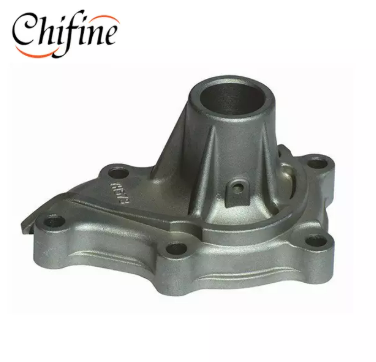
In summary, HPDC is ideal for high-volume, low-cost production of thin-walled, intricate parts. It offers efficiency but requires a significant tooling investment. Permanent Mold Casting, on the other hand, provides stronger, more durable parts and is suitable for medium-to-high-volume runs, though it has slower cycle times.
For businesses focused on high-precision, lightweight components, HPDC is recommended. However, for industries needing robust parts like aerospace or automotive, Permanent Mold Casting is the better choice.
Qingdao Chifine Machinery Co., Ltd provides exceptional aluminum casting services, offering advanced solutions tailored to your production needs, ensuring both cost-efficiency and high-quality results.
A: HPDC uses high pressure to inject molten aluminum, making it ideal for complex parts and high-volume production. Permanent Mold Casting relies on gravity or low pressure and is better for durable, medium-volume parts.
A: HPDC is generally more cost-effective for high-volume production due to faster cycle times, despite higher tooling costs. Permanent Mold Casting is more cost-effective for medium volumes, with lower tooling investment.
A: Choose HPDC for high-volume, low-cost production of intricate, lightweight parts, especially in industries like automotive and electronics.
A: Yes, aluminum casting processes like HPDC provide excellent precision, especially for thin-walled parts with tight tolerances, making it ideal for high-quality products.
A: Consider production volume, part complexity, material strength requirements, and budget. HPDC is best for high-volume, low-cost production, while Permanent Mold Casting excels in producing robust, durable parts.


